We're a family business based in Liverpool specialising in Driveway Cleaning, Patio and also Gutter Cleaning.
Affordable prices from £100
Fill out the form below and we'll get back to you shortly.
A member of our team will contact you ASAP, typically within 5 mins. Alternatively please call or WhatsApp us on 07469 539 068.
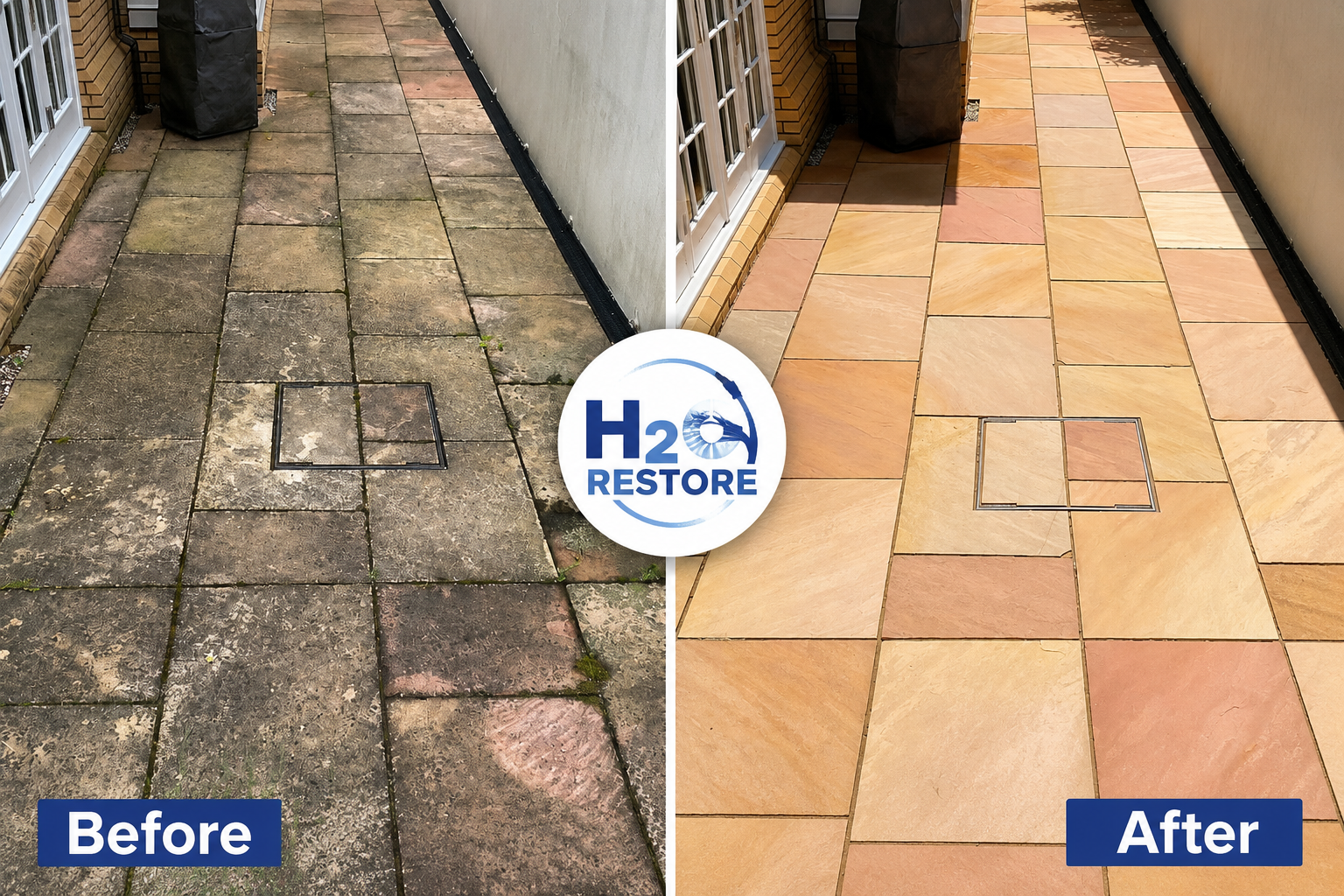
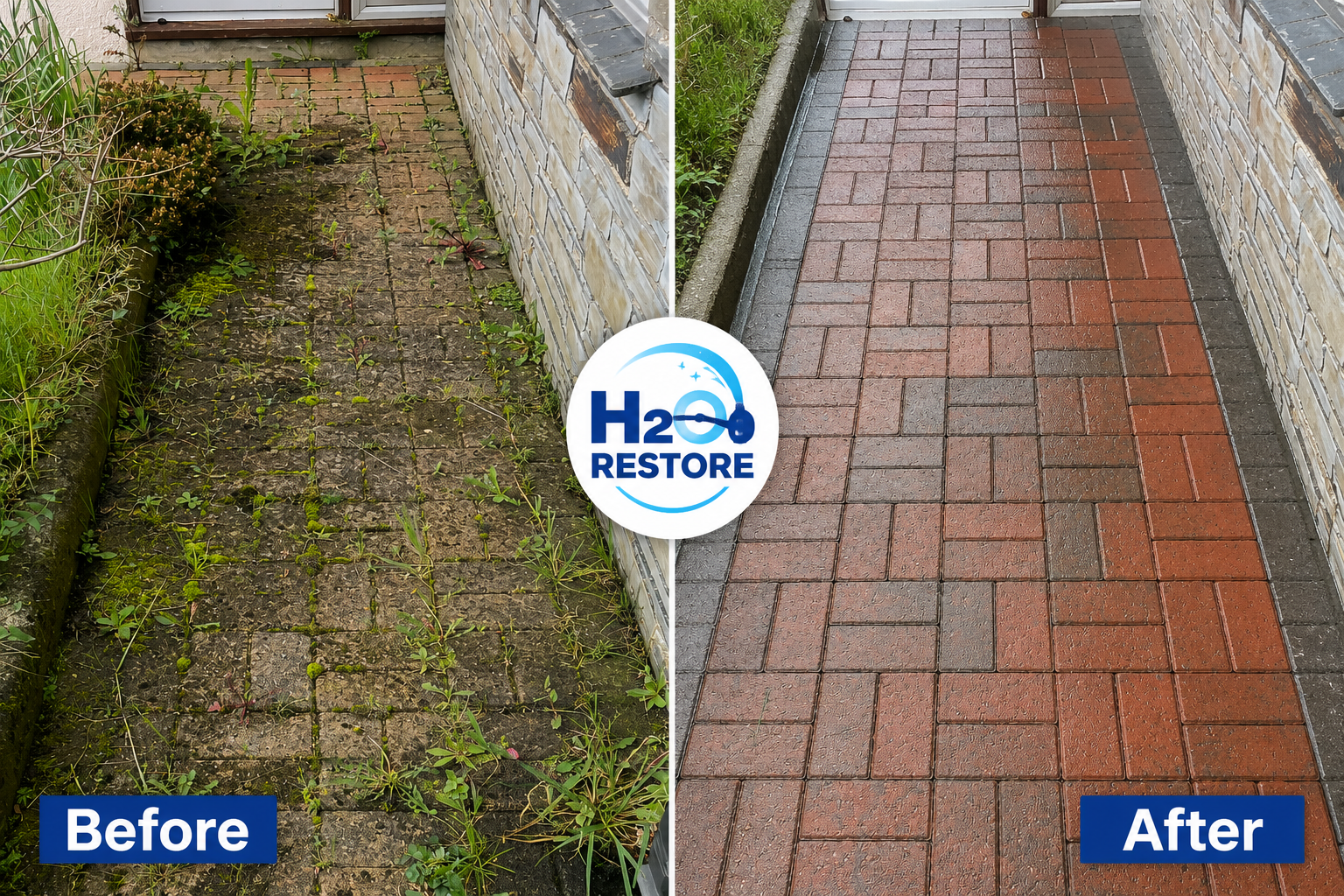
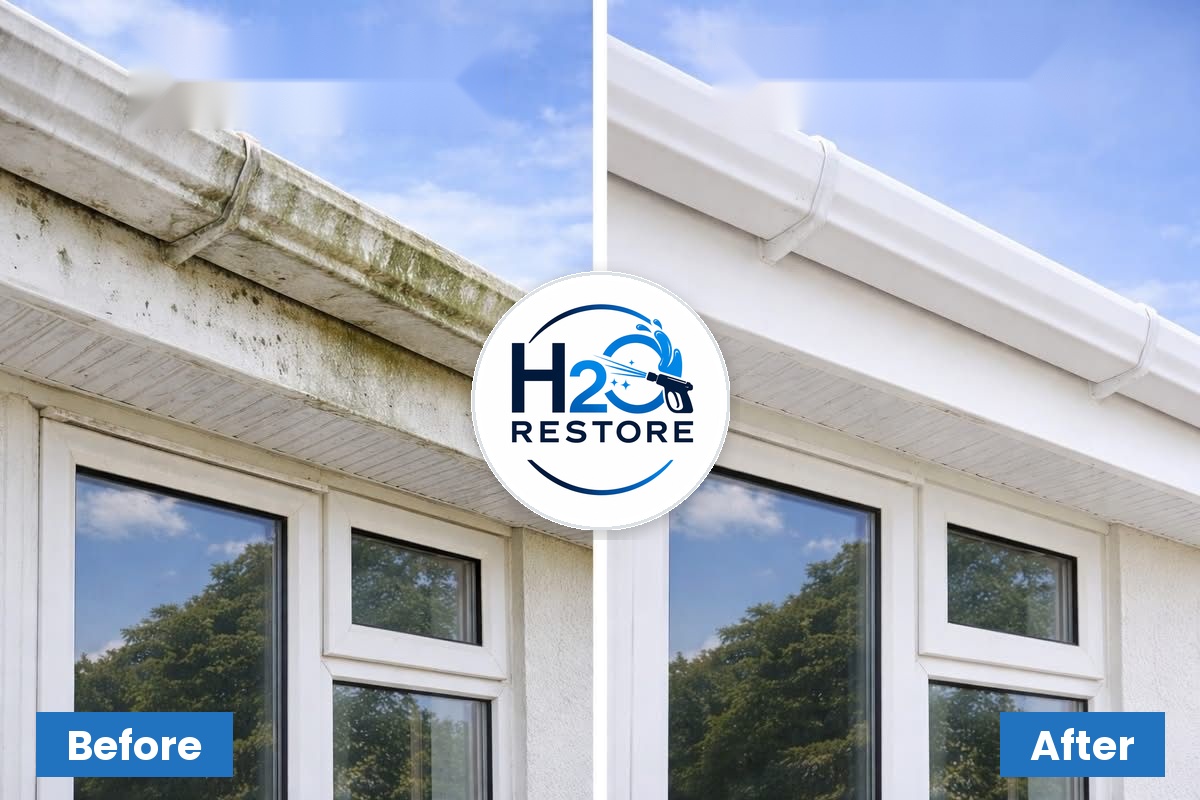
We're an exterior cleaning company in Liverpool and specialise in Jet Washing. Our services include Driveway Cleaning, Patio and Gutter Cleaning. Take a look below to see the full list of services we provide:
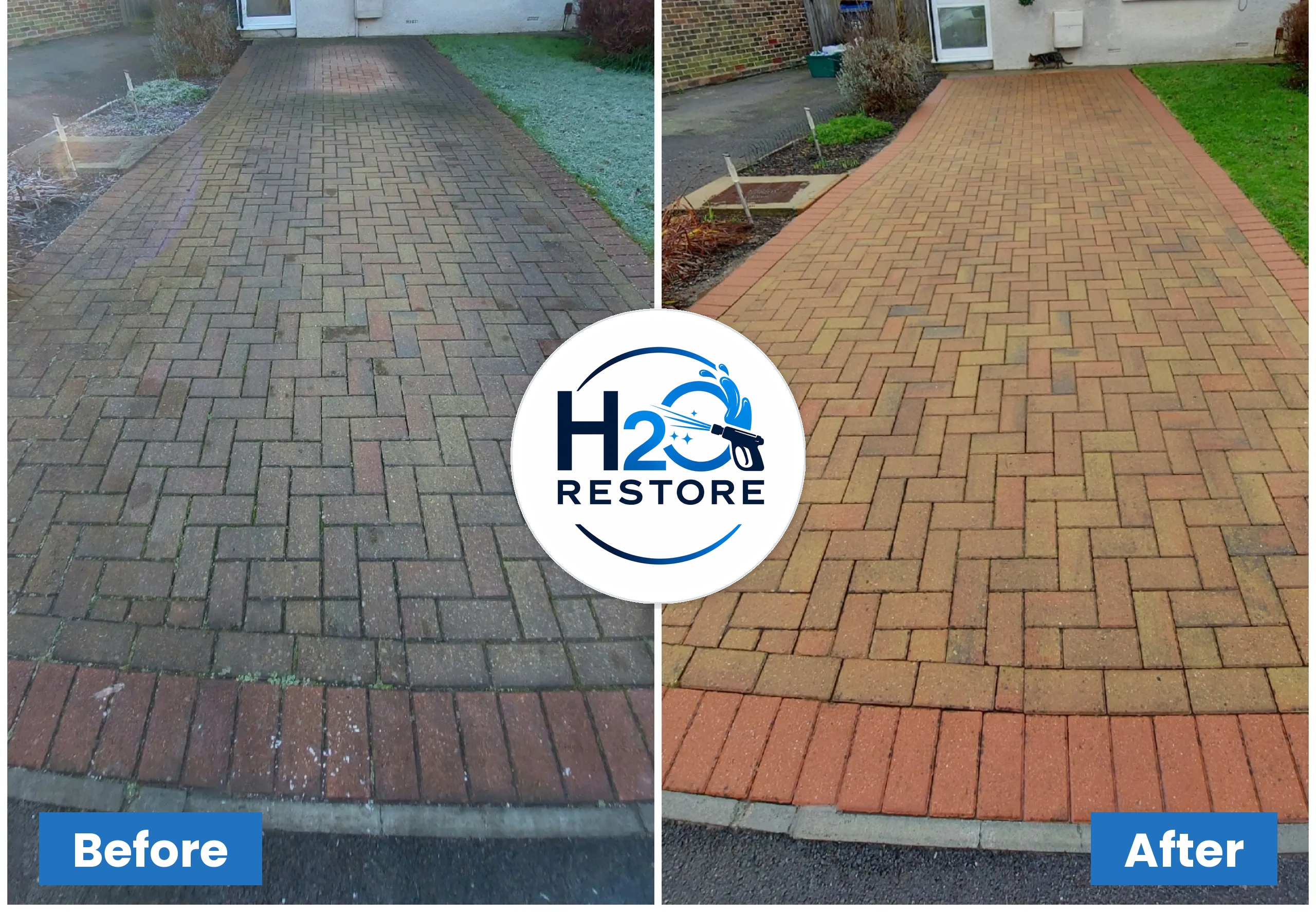
First impressions start at the kerb. Our Liverpool Driveway Cleaning service strips away years of oil stains, moss and weeds, revealing the original colour of your block paving or concrete.
View ServiceGet your garden ready for summer. Liverpool Patio Cleaning by H2O Restore removes slippery algae and stubborn black spot from natural stone and slabs, making your patio safe and inviting again.
View ServiceBlocked gutters can cause damp walls and costly repairs. Our Liverpool Gutter Cleaning uses high-reach vacuums to clear every leaf and moss clump, keeping your home protected all year round.
View ServiceWeeds creeping back between your blocks? Liverpool Driveway Sanding locks kiln-dried sand into the joints after cleaning, preventing movement and stopping regrowth for months to come.
View ServiceMoss isn't just unsightly — it lifts tiles and traps moisture. Our Liverpool Roof Cleaning carefully scrapes growth away and applies a biocide that keeps your roof clear for years.
View ServiceSlippery decking after a rainy spell? Liverpool Decking Cleaning from H2O Restore uses gentle soft washing to remove algae and mould without damaging the wood, so your garden is safe to enjoy.
View ServiceMake your clean last longer. Liverpool Driveway Sealing locks in the fresh look, repels oil spills and stops moss from taking hold again — less maintenance, more kerb appeal.
View ServiceBrick walls faded grey with age? Liverpool
Smelly bins are a thing of the past. Our Liverpool Bin Cleaning service uses hot water sanitisation to eliminate bacteria, odours and fly larvae, leaving your wheelie bins hygienically clean.
View ServiceGreen streaks running down your roofline? Liverpool Fascia Cleaning removes algae, moss and grime from UPVC fascias and soffits, giving your home a crisp, well-maintained finish
View ServiceYellowing window frames letting your home down? Liverpool UPVC Cleaning lifts ingrained dirt and oxidation, restoring your doors and windows to a brilliant white without harsh chemicals.
View ServiceOvergrown garden getting out of hand? Liverpool Garden Restoration clears the clutter, cuts back vegetation and preps your soil, giving you a blank canvas to create the garden you want.
View ServiceA family-run Liverpool business with 5+ years of Jet Washing experience. We're reliable, fairly priced, and treat every property like our own. No gimmicks, just honest work.
We arrive on time, keep you updated, and never leave until you're happy.
Most jobs are done in a few hours, not days. No messing about.
Every service cleaned to a high standard, with the right pressure and care.
Full public liability cover means peace of mind from day one.
Reviews 5.0 out of 200+ properties restored in your area.
"Peter was very professional, he came down and did my front drive and back patio and they are gleaming. Great job. And at an excellent price."
"Very reliable and communicated before, during, and after the job, jet washing my patio, drive and front. Sent pics during and also when work was finished. Very pleased with the job! Would recommend."
"Great job! Fast and reliable."
"Pete started at the time he said and did not stop, even for a break, until he had finished. Really happy with the end results and I would highly recomend this service. Lovely guy too."
"Nice polite lads and happy with the work they did."
"Booked the lads at H20 last week to clean my drive and side of house. Really pleased with the results and happy to recommend them for Driveway Cleaning Liverpool."
We've done this for years and have covered hundreds of jobs all over Liverpool, Southport and Wirral. We get asked loads of questions, like the ones below.
Jet washing is one of the most effective ways to restore outdoor surfaces, removing years of built-up dirt, algae, moss, weeds, black spots and grime without the need for harsh chemicals. If you’re searching for Jet Washing Liverpool, understanding how the process works can help you decide whether it’s the right solution for your property.
Whether you own a residential home, rental property or commercial premises, professionally carried out jet washing can dramatically improve the appearance of your exterior surfaces while helping to protect them from long-term damage.
Jet washing, sometimes referred to as pressure washing, uses a specialist machine to pump water at high pressure through a precision nozzle. This concentrated stream of water breaks down and removes stubborn contaminants from hard surfaces including:
Unlike simply washing a surface with a hosepipe, professional jet washing generates enough pressure to remove deeply embedded dirt that has accumulated over many years.
At H2O Restore, we use commercial-grade equipment capable of producing significantly higher cleaning performance than most domestic pressure washers. This allows us to achieve outstanding results while carefully adjusting the pressure to suit the specific material being cleaned.
Many outdoor surfaces are porous, meaning they absorb moisture, dirt and organic growth over time. Moss, algae and lichen establish themselves within tiny holes and cracks, making them difficult to remove with ordinary cleaning methods.
Professional Jet Washing Liverpool services work by combining:
The water penetrates beneath the dirt layer, lifting contaminants away from the surface instead of merely cleaning the visible top layer.
For example, block paving often appears permanently stained because years of grime have settled between the blocks. Professional jet washing removes this contamination from both the surface and the joints, revealing the original colour underneath.
Many homeowners assume their driveway has permanently changed colour over time. In reality, this is rarely the case.
Outdoor surfaces are constantly exposed to:
The damp climate experienced across Liverpool provides ideal conditions for moss and algae to thrive.
These organisms don’t simply look unattractive. They also make surfaces slippery, increasing the likelihood of slips and falls, particularly during autumn and winter.
Regular professional cleaning removes these hazards before they become a problem.
Professional jet washing is extremely versatile when carried out correctly.
Suitable surfaces include:
Every surface requires a different cleaning approach.
An experienced operator knows how much pressure each material can safely withstand. Using excessive pressure can damage soft stone or remove jointing sand unnecessarily.
This is why professional equipment isn’t simply about having more power—it’s about having greater control.
Many DIY pressure washers available from supermarkets and DIY stores appear impressive, but they are designed for occasional household use.
Professional jet washing systems offer:
The increased water flow is particularly important. Cleaning effectiveness depends on both pressure and volume of water. Many domestic machines generate respectable pressure but insufficient flow to remove heavy contamination efficiently.
As a result, homeowners often spend an entire weekend cleaning a driveway that a professional can restore in only a few hours.
Jet washing removes visible weeds, moss and surface vegetation.
However, established weeds grow from deep within the joints of paving rather than on the surface itself.
Professional cleaning removes the upper growth and flushes many roots from the joints, significantly reducing regrowth.
Following cleaning, many homeowners choose to apply a weed treatment before replacing kiln-dried sand, helping to keep their driveway looking cleaner for longer.
Once the surface has been cleaned, the transformation is often dramatic.
The overall appearance of the property improves considerably.
For block paving, the next stage is usually re-sanding the joints with kiln-dried sand once the surface has fully dried. This stabilises the blocks and helps prevent movement.
Many customers also choose to have the surface sealed. A quality sealant can enhance colour, reduce future staining and inhibit moss and algae growth.
Although DIY machines are widely available, professional cleaning provides several advantages.
A reputable Jet Washing Liverpool company understands:
This reduces the risk of accidental damage while achieving a noticeably higher standard of finish.
At H2O Restore, we specialise in restoring exterior surfaces across Liverpool and the surrounding areas. Our commercial-grade equipment, attention to detail and commitment to customer satisfaction enable us to deliver outstanding results on driveways, patios, paths and other hard surfaces.
Whether your driveway is covered in years of moss, algae, oil stains or general grime, our Jet Washing Liverpool service can restore its appearance safely and effectively. We tailor every clean to the specific surface, ensuring excellent results without unnecessary risk of damage.
If your exterior surfaces have lost their original appearance, professional jet washing is one of the quickest and most cost-effective ways to transform your property’s kerb appeal. Contact H2O Restore today for a free quotation and discover how professional jet washing can bring your driveway or patio back to life.
Yes, jet washing is completely safe for driveways and patios when performed by experienced professionals using the correct equipment and techniques. A common concern among homeowners is whether high-pressure water will damage their paving, strip away jointing sand, or cause structural issues.
While it is true that using incorrect pressure settings or improper techniques can cause damage, a professional exterior cleaning service understands how to treat different materials safely and effectively.
The key to safe jet washing lies in assessing the surface before cleaning begins. Different materials require different approaches:
One of the main reasons DIY jet washing often leads to damage is the reliance on standard lance nozzles. When a high-pressure jet is concentrated on a single small point, it can easily score the surface, leaving permanent “striping” marks.
Professional Jet Washing Liverpool services utilise rotary flat surface cleaners. These attachments feature spinning nozzles housed within a protective dome. They distribute the water pressure evenly over a wider area, providing a deep, consistent clean without the risk of scoring or striping the paving.
Safe jet washing isn’t just about the cleaning process itself; it’s also about what happens afterwards.
As mentioned, re-sanding block paving is a crucial step to maintain structural integrity. Furthermore, many professionals offer sealing services. Applying a high-quality sealant after cleaning provides a protective barrier against future staining, UV fading, and weed growth, extending the lifespan of your driveway or patio.
In summary, when you hire a knowledgeable and fully insured professional like H2O Restore, jet washing is a highly safe, effective, and transformative process for your exterior surfaces.
A clean driveway significantly enhances your property’s kerb appeal, but knowing exactly when to schedule a professional jet wash can be tricky. As a general rule, we recommend having your driveway professionally cleaned once a year. However, the ideal frequency depends on several factors, including the type of surface, the local environment, and how much use the driveway gets.
Different materials weather differently and require tailored maintenance schedules:
The time of year also plays a crucial role in maintaining your exterior surfaces:
At H2O Restore, we tailor our Jet Washing Liverpool services to your property’s specific needs. Whether you’re booking an annual maintenance clean or restoring a driveway that hasn’t been touched in a decade, we have the commercial-grade equipment and expertise to deliver outstanding results.
We can also apply high-quality sealants to extend the time needed between cleans, protecting your investment for the long term. Contact us to set up a regular maintenance schedule that keeps your property looking its best year-round.
One of the most common questions we receive is whether our cleaning methods can tackle specific, stubborn issues like moss, algae, and vehicle fluids. The short answer is yes, but the exact approach depends on the type of stain and the surface material being treated.
Driveways and patios are continuously exposed to the elements. Because many exterior materials—like block paving, concrete, and natural stone—are porous, they naturally absorb moisture, vehicle drips, and organic spores. Over time, these penetrate deep beneath the surface layer, resulting in stubborn stains that a standard garden hose cannot shift.
Yes, professional jet washing is highly effective at removing moss. Moss tends to thrive in the damp, shaded joints of block paving and patio slabs. Our high-pressure equipment easily slices through these growths, lifting the moss and successfully flushing the root systems out from the joints.
Algae often manifests as a green or reddish film that becomes incredibly slippery and hazardous when wet. Jet washing easily strips away this algae build-up, fully restoring the surface’s natural grip and original visual appeal.
Black spot (or lichen) is notoriously difficult to remove because it sends tiny, aggressive roots deep into the pores of natural stone, such as Indian Sandstone. Standard water pressure alone often struggles to eliminate it without risking surface damage. In these scenarios, we apply a targeted chemical soft wash treatment to break down the lichen before gently rinsing it clear.
Oil stains are challenging because oil penetrates deeply into porous stone and concrete. While water pressure alone won’t dissolve engine oil, combining professional jet washing with commercial-grade, eco-friendly degreasers significantly lifts and breaks down the stain. Fresh oil spills are much easier to remove entirely than older, baked-in stains.
Yes. Heavy vehicles turning repeatedly on driveways often leave visible rubber deposits. Our high-flow surface cleaners are designed to agitate and lift these rubber marks from concrete and block paving without damaging the underlying substrate.
Absolutely. Standard domestic pressure washers simply lack the water volume (flow rate) required to flush out heavy debris effectively. They also tend to rely on pinpoint nozzles that can etch and damage paving. Our commercial flat-surface rotary cleaners distribute high pressure evenly, ensuring an aggressive yet perfectly safe clean.
Organic growth like moss and algae spreads via airborne spores, so it will naturally attempt to return to damp, shaded environments over time. Oil stains can also “wick” back up to the surface if they have penetrated deeply into the ground structure.
Not always. For general dirt, mud, and light algae removal, the high-pressure water does all the heavy lifting. We only introduce specialised, biodegradable cleaning agents for treating heavy oil deposits, severe black spot infestations, or deep-rooted organic staining.
We pride ourselves on achieving exceptional transformations, but we are always honest about limitations. While we can eradicate moss, dirt, and algae entirely, some extremely old or deep-seated oil stains may leave a faint “shadow” even after heavy treatment. Nevertheless, their appearance will be vastly and noticeably improved.
At H2O Restore, we evaluate every stain and surface individually to determine the safest, most effective removal method. We never rely on a generic “one size fits all” approach. Contact us today to discuss your specific requirements and discover how we can restore your driveway or patio to its absolute best.
While the terms “pressure washing” and “jet washing” are frequently used interchangeably across the UK, there are technical differences between the two methods. Understanding these distinctions helps ensure the correct cleaning method is applied to your specific surfaces.
The primary distinction between true jet washing and standard pressure washing lies in the temperature of the water used during the cleaning process:
Because jet washing uses hot water, it is far more effective at breaking down stubborn, greasy, or deeply embedded contaminants. Think of it like washing greasy dishes: cold water struggles to shift grease, while hot water melts it away. Jet washing is exceptionally effective for:
For the majority of domestic exterior cleaning—such as standard driveway cleaning, patio restoration, and removing seasonal moss or algae—cold water pressure washing is more than sufficient and provides outstanding results.
Additionally, hot water jet washing can sometimes be too aggressive for softer materials, such as delicate natural stone or older brickwork, where cooler water combined with appropriate chemical treatments (soft washing) is a safer, more appropriate choice.
At H2O Restore, our commercial-grade systems allow us to adjust pressure, flow rate, and cleaning techniques to match the exact requirements of your property. Whether a job requires the brute force of a high-flow cold pressure wash, a gentle soft wash, or specialised heavy-stain removal techniques, we have the equipment and expertise to deliver a flawless, damage-free finish.
One of the most common concerns property owners have when considering exterior cleaning is whether high-pressure water will cause permanent damage to their block paving, patio stones, or the pointing (mortar) between them. When carried out professionally, jet washing is highly effective and completely safe, but understanding the process helps alleviate these concerns.
Block paving itself is manufactured from dense concrete or clay, making the blocks incredibly durable and capable of withstanding high-pressure cleaning. The blocks will not crack, chip, or break under normal professional jet washing. The main consideration with block paving is not the blocks themselves, but the kiln-dried sand that holds them together.
Block paving relies on fine, kiln-dried sand swept into the joints to create friction and lock the blocks in place. Over time, dirt, moss, and weeds contaminate this top layer of sand. Professional cleaning intentionally flushes out this contaminated upper layer to remove the roots, moss spores, and grime that have built up.
Because the cleaning process removes the top layer of jointing sand, it must be replaced. A professional service will always return once the paving is completely dry to brush fresh kiln-dried sand back into the joints. This crucial step restores the structural integrity of the driveway and prevents the blocks from shifting or sinking.
For patios and natural stone laid with mortar pointing, high pressure can occasionally dislodge loose or crumbling mortar. However, structurally sound pointing will easily withstand professional cleaning. If your pointing is already degrading due to age, weathering, or frost damage, the cleaning process may simply reveal the existing underlying issues rather than cause new damage.
Experienced jet washing technicians assess the condition of your paving and pointing before starting any work. We adjust our equipment, using lower pressure and higher water flow, or adopting a “soft washing” chemical approach for delicate areas, to ensure the surface is cleaned thoroughly without compromising its structure.
Homeowners using domestic pressure washers often cause accidental damage by using aggressive pinpoint nozzles (turbo dirt blasters) held too close to the surface. This concentrated jet can score the face of natural stone, cut lines into brickwork, and blast out too much sand or healthy mortar.
Yes. Commercial flat-surface rotary cleaners use a spinning bar with angled nozzles housed inside a large dome. This design distributes the water pressure evenly over a wide area, providing a consistent, deep clean without the risk of scoring the paving or blasting out jointing material uncontrollably.
Decorative surfaces, such as Indian Sandstone, limestone, and patterned imprinted concrete, require a tailored approach. For example, imprinted concrete often needs to be resealed after cleaning to protect its colour and finish, while soft natural stone benefits from low-pressure soft washing to gently lift black spots and algae.
In most cases, it is actually better to clean the surface first. Removing the dirt, moss, and algae reveals the true condition of the paving and pointing, making it much easier to see exactly what repairs are needed. Any missing mortar or loose blocks can then be accurately repaired on a clean surface.
Applying a high-quality sealant after cleaning and re-sanding is highly recommended. Sealers bind the jointing sand, making it much harder for water to wash it away in the future. They also provide a protective barrier against oil stains, UV fading, and weed growth, significantly extending the life of the clean.
We generally recommend having block paving professionally cleaned and re-sanded every 12 to 18 months. Regular maintenance prevents weeds and moss from establishing deep roots that can eventually destabilise the blocks, keeping your driveway looking pristine and structurally sound.
Professional jet washing is an incredibly versatile cleaning method capable of restoring a wide variety of exterior surfaces. However, not all surfaces are created equal, and each requires a specific approach, pressure setting, and sometimes specialised cleaning solutions to achieve the best results safely.
Driveways endure heavy vehicle traffic, oil leaks, and constant exposure to the elements. Jet washing effectively removes tyre marks, oil stains, moss, and ingrained dirt, instantly boosting your property’s kerb appeal.
Whether your patio is made of natural stone, porcelain, or concrete slabs, professional cleaning removes slippery algae, black lichen spots, and general grime, making your outdoor living space safe and inviting again.
Block paving is notorious for attracting weeds and moss in the sand joints. Jet washing flushes out this organic growth and contaminated sand. We then re-sand the joints once dry to ensure the paving remains structurally sound.
Solid concrete and pattern-imprinted concrete are highly durable and respond exceptionally well to high-pressure rotary cleaning, which lifts years of dirt and restores the original finish evenly without striping.
Damp, shaded garden paths quickly become coated in green algae, creating a significant slip hazard. Jet washing strips this away, restoring the path’s natural colour and providing a safe, high-grip surface.
Exterior steps are high-traffic areas where safety is paramount. Removing moss and algae build-up is crucial to prevent accidents, especially during the wetter months.
Garden walls and exterior brickwork can accumulate dirt, efflorescence (white salt deposits), and organic growth. We use carefully calibrated pressure to clean the bricks without damaging the mortar pointing.
Wooden and composite decking requires a much gentler approach. High pressure can splinter wood and ruin the finish. We use low-pressure washing combined with specialist treatments to safely remove algae and restore the wood’s natural beauty.
Like decking, wooden fencing needs a delicate touch. Gentle washing removes green algae and grey weathering, perfectly preparing the wood for a fresh coat of stain or paint.
First impressions matter for businesses. We clean shop fronts, forecourts, car parks, and walkways, ensuring your commercial property looks professional, welcoming, and safe for customers and staff.
High-footfall areas require regular maintenance to remain safe and hygienic. We provide efficient cleaning for playgrounds, courtyards, and public walkways, often working out of hours to minimise disruption.
While highly effective, high-pressure water is not suitable for everything. Surfaces that should generally be avoided or treated with alternative “soft wash” methods include:
Using the wrong equipment or excessive pressure can cause irreversible damage. Our commercial-grade rotary flat-surface cleaners distribute water evenly, preventing the “striping” or etching often caused by domestic pressure washer lances.
Regular professional cleaning extends the lifespan of your exterior surfaces. It prevents weed roots from destabilising block paving, stops algae from creating slip hazards, and protects your property’s overall value and appearance.
At H2O Restore, we don’t just blast water at your property. We assess every surface individually, adjusting our pressure, flow rate, and cleaning solutions to provide the safest, most effective clean possible. Contact us today to discuss your specific requirements.
With high street retailers offering an array of affordable domestic pressure washers, it can be tempting to tackle exterior cleaning yourself. However, while a DIY approach might seem cost-effective initially, hiring a professional Jet Washing Liverpool service provides numerous advantages that guarantee a superior, safer, and longer-lasting finish.
Domestic pressure washers are designed for light duties like washing cars or garden furniture. Professional-grade machines operate at much higher flow rates (the volume of water delivered per minute). It is this water volume, combined with appropriate pressure, that effectively flushes out heavy debris, deeply ingrained dirt, and stubborn root systems that domestic machines leave behind.
Not all surfaces can be treated the same way. A professional understands exactly how to adjust pressure levels, nozzle angles, and cleaning techniques for different materials. Treating delicate Indian Sandstone requires a very different approach compared to a solid concrete driveway to avoid permanent damage.
One of the most common issues with DIY pressure washing is accidental damage. Standard pinpoint lances can easily:
Professionals have the correct equipment and training to eliminate these risks entirely.
Cleaning a standard two-car driveway with a domestic pressure washer can easily consume your entire weekend. Because professional equipment is vastly more powerful and utilises wide-coverage attachments, we can often complete the same job to a much higher standard in just a few hours, leaving you to enjoy your days off.
Water pressure alone cannot remove everything. Baked-in oil stains, heavy grease, and black lichen (black spots) require specialised commercial-grade cleaning agents and biocides. Professionals have access to, and are fully trained to safely use, highly effective treatments that are not available to the general public.
High-pressure water is inherently dangerous. It can cause severe injury if mishandled and can easily throw up loose stones and debris. Professionals wear the correct protective equipment, manage public access around the work area safely, and hold comprehensive public liability insurance for complete peace of mind.
We use heavy-duty rotary flat-surface cleaners. These large, dome-like attachments house spinning nozzles that distribute water pressure evenly over a wide area. They provide a perfectly uniform, deep clean without the aggressive surface degradation associated with standard wand lances.
A professional service doesn’t stop when the washing is done. For surfaces like block paving, replacing the kiln-dried sand is critical for structural stability. We manage this entire process and can also apply high-quality sealants to protect your investment for the long term against weather and weeds.
The difference between a DIY wash and a professional restoration is instantly noticeable. Professional jet washing revitalises natural colours, completely eradicates weeds and moss, and delivers an immaculate, uniform finish that instantly boosts your property’s value and aesthetic appeal.
When you factor in the cost of purchasing a machine, buying cleaning chemicals, high water usage, and the value of your own time—plus the potential cost of repairing accidental damage—hiring a professional is highly economical. You get a guaranteed result without the hassle of storing and maintaining equipment you only use once a year.
At H2O Restore, we combine industry-leading equipment with years of hands-on experience to deliver faultless exterior cleaning across Liverpool. We respect your property, work efficiently, and guarantee a finish that will leave your driveway or patio looking as good as the day it was laid. Contact us today to see the difference a professional touch makes.
When booking a professional exterior cleaning service, homeowners understandably want to know how long the process will take and how long their driveway or patio will be out of action. While every job is unique, professional jet washing is significantly faster than DIY methods.
Several factors determine exactly how long a jet washing job will take:
As a general guide, using our commercial-grade equipment:
Yes. If a surface has been neglected for many years and is covered in a thick layer of moss or severe algae, the initial cleaning phase requires a slower, more deliberate pass. In cases of severe “black spot” (lichen) on natural stone, we must apply a specialised soft-wash biocide treatment, allow it to dwell and break down the organic matter, and then rinse it clear. This dwelling time adds to the overall duration of the job.
If we are cleaning block paving, the cleaning process is only the first stage. Once the blocks have been thoroughly washed and the old, contaminated sand removed from the joints, the surface must be completely dry before fresh kiln-dried sand can be brushed back in.
Because paving rarely dries on the same day it is washed (especially in the cooler months), we usually schedule a brief return visit a few days later to complete the re-sanding. If you have requested a sealant to be applied, this will also take place on a subsequent dry day.
We can carry out the actual jet washing in almost all weather conditions, including light to moderate rain. After all, the surface is getting wet anyway! However, severe weather such as torrential downpours, freezing temperatures (ice risks), or high winds may require us to reschedule for safety reasons. Re-sanding and sealing absolutely require dry conditions.
Domestic pressure washers have a much lower water flow rate (often around 6-8 litres per minute). Our commercial machines deliver significantly higher flow rates, often exceeding 15-21 litres per minute.
Combined with our wide flat-surface rotary cleaners, we can clean a standard driveway in a fraction of the time it would take using a standard domestic wand, saving you an entire weekend of back-breaking work.
The cost of professional jet washing in Liverpool varies depending on several factors specific to your property. At H2O Restore, we believe in transparent, upfront pricing, which is why we always provide a free, no-obligation quotation before beginning any work.
While it can be tempting to look for a standard “per square metre” price online, treating every driveway or patio exactly the same often leads to inaccurate quotes.
When calculating a quotation, we take the following into account:
You may occasionally see very cheap jet washing quotes advertised locally. Unfortunately, these often come with hidden costs or significant compromises in quality.
A suspiciously low price usually means the operator is:
Absolutely. Compared to the enormous cost of lifting and replacing a driveway or patio, professional restoration is incredibly cost-effective. A professional clean protects your investment, prevents structural damage caused by invasive weed roots, and instantly boosts your property’s kerb appeal.
The easiest way to find out exactly how much it will cost to restore your exterior surfaces is to contact us. We can often provide an accurate estimate if you send us a few clear photographs of the area, or we can arrange a brief visit to assess the job in person. Contact H2O Restore today to discuss your requirements.